




Technical Tours
Crop Development Centre (CDC)
Date: July 29, 2026
Duration: Two hours 3:00 to 5:00 p.m. (buses will depart at 2:30)
Cost: $75.00 per person
CDC Website
This field tour will showcase advances in genetics, innovative technologies, and the scientific expertise behind the development of modern crop varieties. Participants will learn how cutting‑edge strategies are used to accelerate selection and deliver improved varieties to farmers.
Guests will visit the Crop Development Centre’s main research hub at the Kernen Crop Research Farm, which hosts more than 80,000 research plots each year. The tour offers a first‑hand look at the scale, innovation, and infrastructure required to move new crop varieties from research to farmers’ fields. Designed for guests of all backgrounds, this tour provides an engaging introduction to crop development and its importance to agriculture in Western Canada.
Founded in 1971, the Crop Development Centre (CDC) is Western Canada’s leading crop research and variety development program. Operating within the Department of Plant Sciences at the University of Saskatchewan, the CDC translates science into practical crop varieties that improve farm productivity and strengthen agriculture across the region. CDC scientists combine field‑based research with advanced genetics and modern technologies to enhance crop performance, disease resistance, and end‑use quality. Crops developed at the CDC include wheat, barley, oats, flax, peas, lentils, chickpeas, beans, soybeans, and specialty crops. To date, nearly 600 commercial varieties across more than 40 crop types have been released.
Global Institute for Food Security (GIFS)
Date: July 29, 2026
Duration: One hour 4:00 to 5:00 p.m. (buses will depart at 3:45)
Cost: $65 per person
GIFS Website
Explore how the Global Institute for Food Security at the University of Saskatchewan accelerates agricultural innovation through advanced genomics, high throughput phenotyping, and cutting edge biomanufacturing. The tour provides a focused, behind the scenes look at the technologies and expertise that support researchers, breeders, and industry partners across the ag innovation pipeline.
The tour begins in the FCC Breeding Acceleration Program, where participants will step inside the high throughput genotyping laboratory to see how rapid DNA extraction, sequencing, and secure analytics help breeders make informed, auditable, and anonymous decisions. Guests will learn how GIFS integrates genomics, automation, and advanced computational tools to shorten breeding cycles and support trait development programs.
The tour then highlights GIFS’ Biomanufacturing Program, where visitors will see facilities supporting engineering biology, machine learning–guided design, and precision fermentation. Participants will learn how microbial strains, enzymes, and bio based agricultural inputs are developed, optimized, and scaled through controlled fermentation and analytical workflows. This stop shows how GIFS helps partners advance biological products from early research through pilot scale validation, contributing to improved crop resilience, soil health, nutrient efficiency, and sustainable input development.
For pulse researchers, the Aphanomyces Root Rot Phenotyping Program is a key feature. Attendees will observe how greenhouse evaluations, digital imaging, and developing machine learning models generate consistent, objective disease ratings that support resistance breeding efforts.
For safety purposes we do have a dress code while touring our facility, no exposed skin from the waist down and closed shoes please. Guests will be provided with a lab coat and goggles before entering the labs.
National Research Council of Canada (NRC)
Date: July 29, 2026
Duration: 1.5 hours 4:00 to 5:30 p.m. (buses should leave at 3:45)
Cost: $65 per person
NRC Website
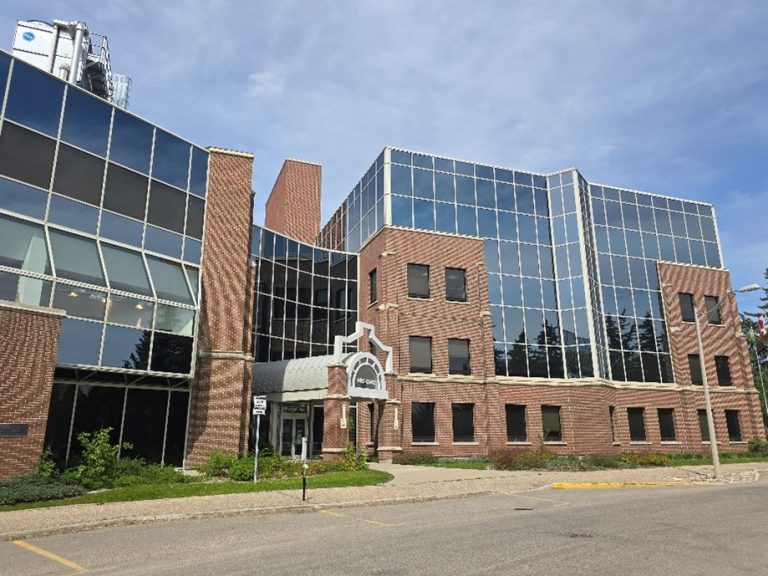
The NRC is the Government of Canada’s largest federal research and development organization. It works with industry, academia, and government partners to advance scientific discovery, develop new technologies, and support innovation. Located on the University of Saskatchewan campus, experts from the NRC’s Aquatic and Crop Resource Development Research Centre support advanced research and innovation in crop development, plant genomics, and plant biotechnology. The site is equipped with specialized laboratories, including plant growth, genomics, and cell technology facilities that help translate scientific discoveries into real‑world solutions and strengthen Canada’s life sciences capabilities.
Please Note: To attend this tour, a valid government-issued photo ID must be presented at the time of departure. Guests will be required to place any personal devices into secure locked storage for the duration of the tour.